
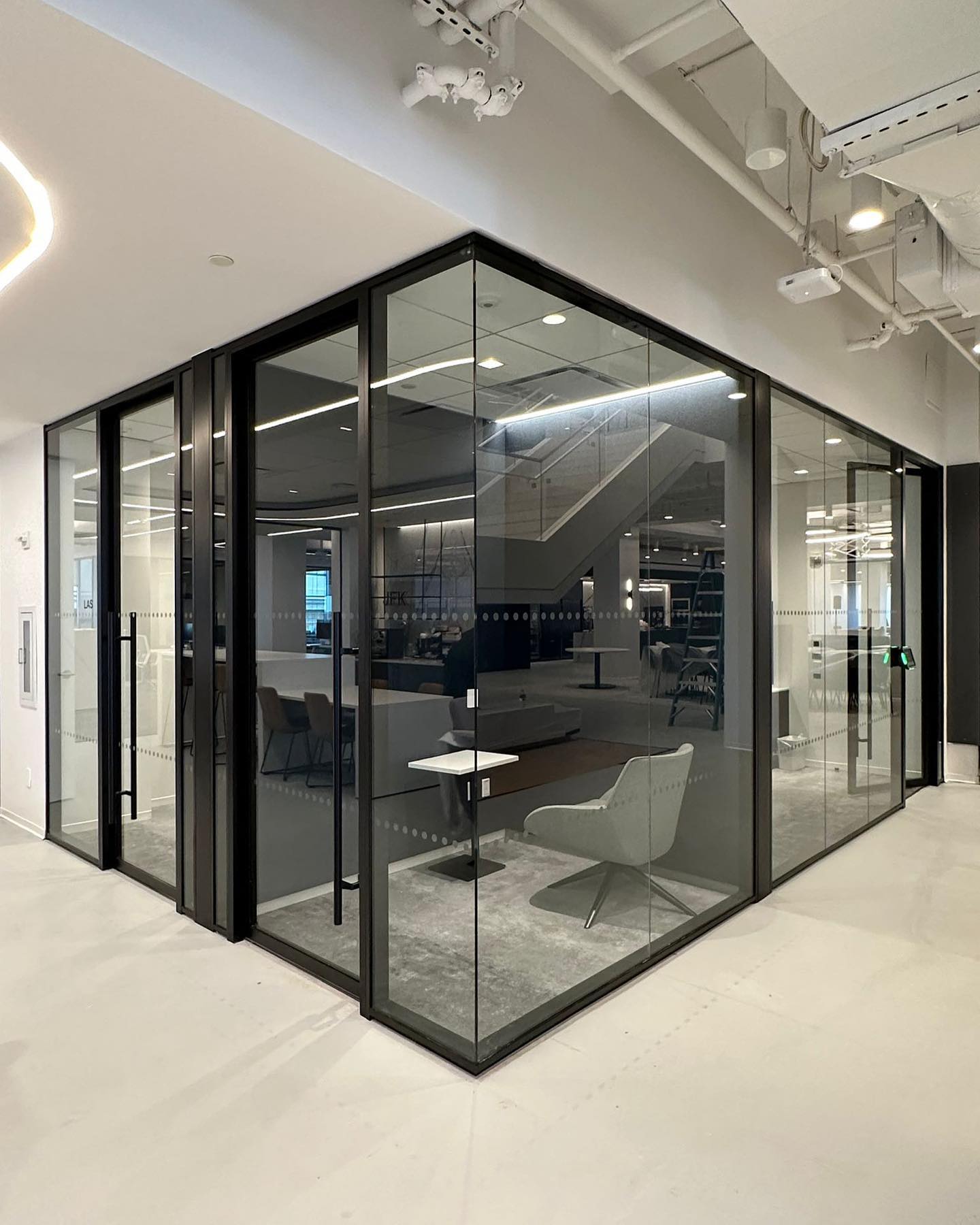
Two Fundamentally Different Approaches
Traditional construction and modular wall systems solve the same problem - dividing open space into functional rooms - through completely different methods. Traditional construction uses wood or metal studs, drywall sheets, joint compound, paint, and permanent attachment to the building structure. It requires licensed contractors, building permits, inspections, and typically takes 2-4 weeks per floor.
Modular wall systems use factory-manufactured panels that connect via proprietary hardware to floor tracks and ceiling clips. No studs, no drywall, no wet trades. Installation is performed by factory-certified crews - not general contractors - and most systems do not require building permits because they are classified as furniture, not construction. A floor of modular walls installs in 3-5 days.
The choice between them should be driven by three questions: How often will your space change? What is your timeline? And what is your 10-year total cost tolerance?
Installation Speed and Disruption
Traditional drywall construction for a 20-office floor typically runs 3-4 weeks from framing to final paint - assuming no delays from inspections, material shortages, or coordination conflicts with other trades. Add electrical rough-in and you are at 5-6 weeks. The process generates dust, noise, and odor that disrupts adjacent occupied spaces. After-hours installation is possible but adds 15-25% to labor costs.
Modular wall systems for the same 20-office floor install in 3-5 business days. Factory manufacturing eliminates on-site cutting, sanding, and painting. Dust and noise are minimal - no joint compound, no paint fumes, no drywall dust. Most installations proceed during normal business hours without disrupting adjacent spaces, though after-hours scheduling is available at standard rates.
For businesses paying rent on both old and new spaces during a transition, the 3-4 week difference in installation time translates directly to avoided double-rent costs. At $50 per square foot annually for a 15,000 square foot floor, each week of delay costs approximately $14,400.
Acoustic Performance: The Honest Comparison
The most common objection to modular walls is acoustic performance. The concern is legitimate - early-generation modular walls from the 1990s and 2000s often delivered STC ratings of 30-35, well below the STC 45-50 that standard drywall construction achieves.
Current-generation modular walls have closed this gap. Teknion, DIRTT, and other major manufacturers now offer systems achieving STC 45-52 when properly installed - matching or exceeding standard drywall performance. The critical variable is installation quality, not the product itself.
Acoustic performance is measured at the weakest point, not the strongest. A wall panel rated STC 50 by the manufacturer delivers STC 50 at panel center. But sound travels through gaps at floor connections, ceiling junctions, and panel-to-panel seams. A 1/8-inch gap at the ceiling can reduce effective STC by 10-15 points. This is why factory-certified installation matters - crews trained on the specific system know where the critical seal points are and how to verify performance after installation.
Drywall construction has the same vulnerability at different points: electrical boxes back-to-back through shared walls, unsealed penetrations above the ceiling line, and gaps at the floor plate. Neither system is inherently superior acoustically - both depend on installation quality.
Flexibility and Reconfiguration Costs
This is where the comparison diverges most dramatically. Drywall is permanent. Modular walls are not.
Relocating a drywall office requires demolition (remove drywall, pull studs, haul debris), then reconstruction (new framing, new drywall, taping, mudding, sanding, priming, painting, electrical rework). Cost: $1,000-$3,000 per office depending on complexity. Timeline: 1-2 weeks per office. The old location needs patching and painting. The debris goes to a landfill.
Relocating a modular office requires disconnecting panels from floor tracks and ceiling clips, moving them to the new location, and reconnecting. Cost: $200-$500 per office. Timeline: hours, not weeks. The old location needs no repair - remove the floor tracks and the floor is clean. Nothing goes to a landfill.
For a company that reconfigures once during a 10-year lease - even a single team relocation - the modular option reaches cost parity with drywall. For companies that reconfigure annually, modular walls save $10,000-$50,000 per year in avoided demolition and reconstruction.
When to Choose Each Option
Choose traditional drywall when your layout is fixed for the duration of your lease, you need to match existing architectural details (crown molding, chair rail, wainscoting), you are building in a space you own rather than lease, or your budget is constrained and you do not anticipate any reconfiguration.
Choose modular walls when your company is growing and headcount will change, you are in a leased space and want to take your walls with you at lease end, you need to reconfigure more than once during your lease term, you want the Section 179 tax advantage (7-year depreciation vs. 39-year), your timeline is compressed and you cannot wait 4-6 weeks for traditional construction, or you need acoustic performance equivalent to drywall with the flexibility to relocate.
The hybrid approach is increasingly common: drywall for permanent perimeter offices and core infrastructure, modular walls for interior private offices and conference rooms that may need to flex. This captures the cost advantage of drywall where flexibility is unnecessary and the reconfiguration advantage of modular walls where it matters.
Related Services
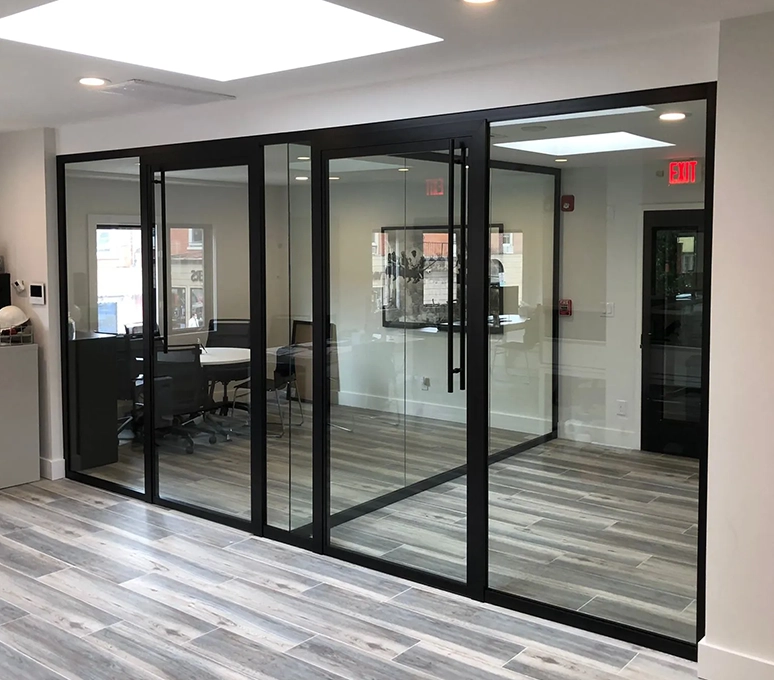
Modular Wall Systems
Glass partitions, demountable walls, and acoustic solutions. DIRTT & Teknion certified.
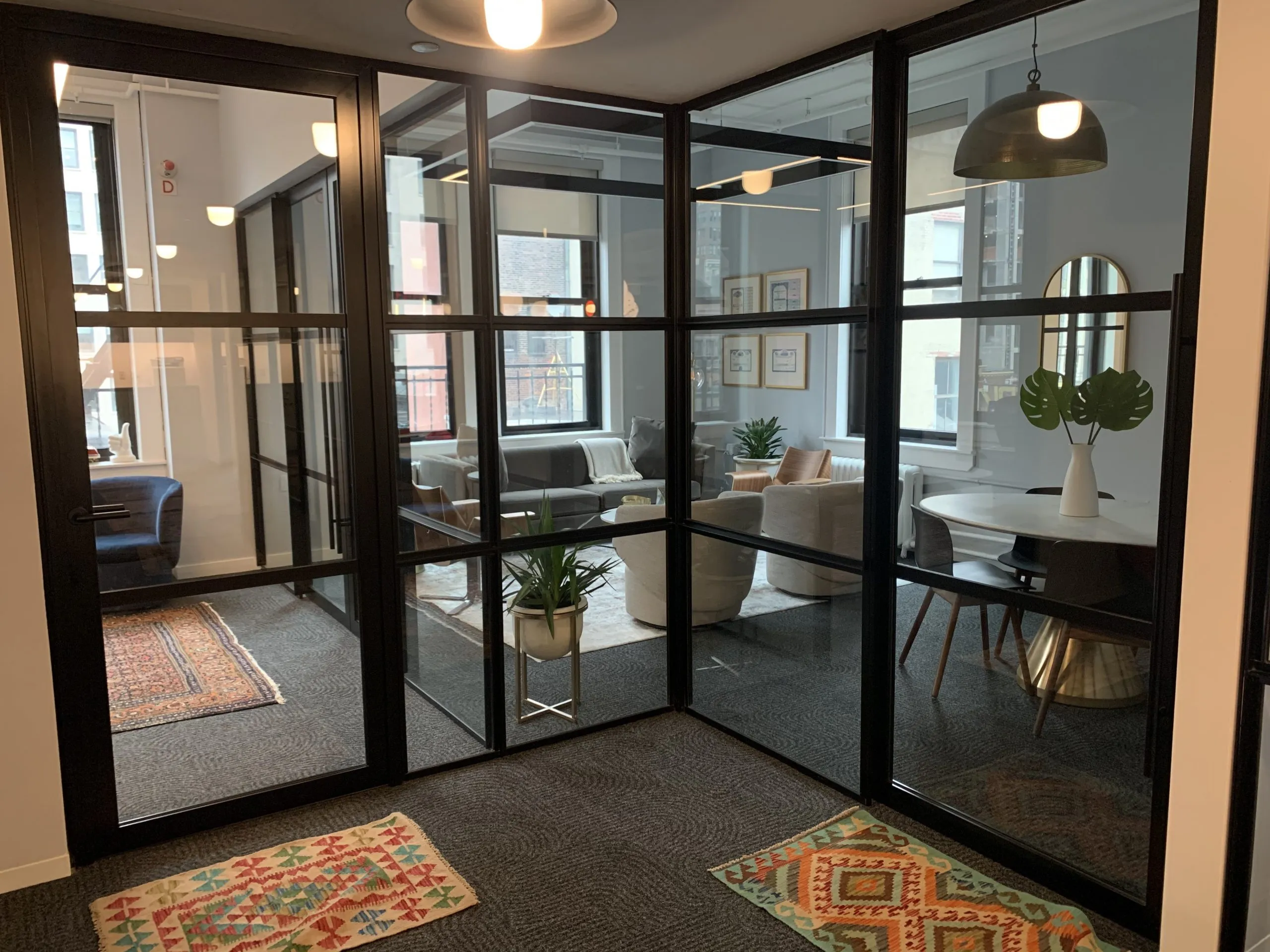
Commercial Office Installation
Full-service office fit-outs, build-outs, and renovations for corporate spaces.
See our cost guide for detailed per-square-foot pricing.
Need help with your project?
Get a free consultation and fixed-price estimate from our certified installation team.
About the Author

Innovative Projects
MBE/SBE certified commercial office installation. Serving NJ, NY & CT since 2019.