
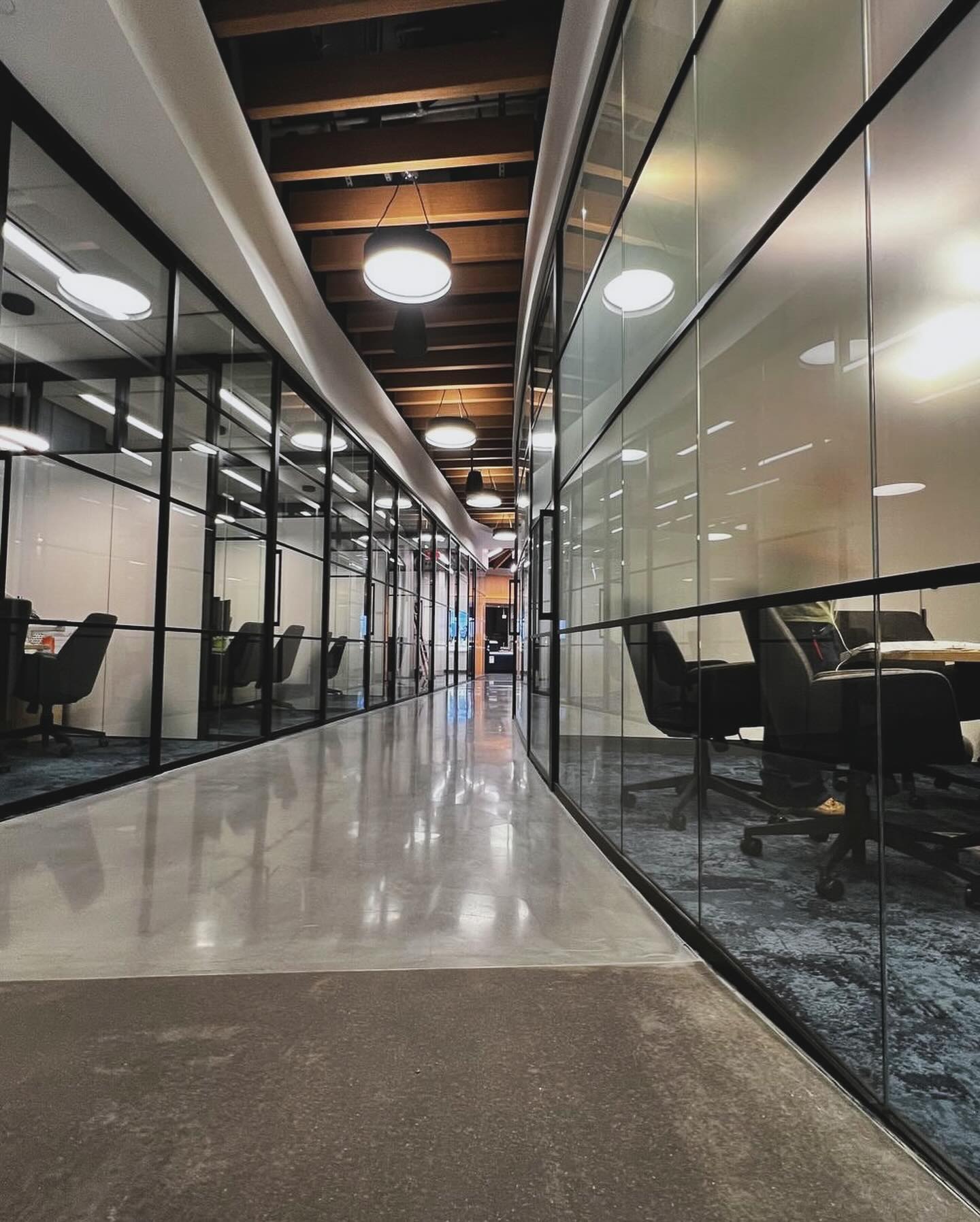
Why the IRS Classifies Modular Walls as Furniture
The distinction matters more than most facilities managers realize. Traditional drywall construction is classified as a permanent building improvement - it becomes part of the real property and depreciates over 39 years under the Modified Accelerated Cost Recovery System (MACRS). A $200,000 drywall partition project generates roughly $5,128 in annual depreciation deductions.
Modular wall systems - demountable partitions that bolt together without permanent attachment to the building structure - are classified as tangible personal property. They are furniture in the eyes of the IRS, not construction. This classification shifts them from the 39-year depreciation schedule to the 7-year schedule, and more importantly, makes them eligible for Section 179 expensing.
How Section 179 Works for Office Installations
Section 179 of the Internal Revenue Code allows businesses to deduct the full purchase price of qualifying equipment in the year it is placed in service, rather than depreciating it over multiple years. For 2026, the deduction limit is $1,220,000 with a phase-out threshold beginning at $3,050,000 in total equipment purchases.
A practical example: a law firm installs $180,000 in DIRTT modular wall systems to create 12 private offices. Under Section 179, the firm can deduct the entire $180,000 in the year of installation. If the firm is in the 32% federal tax bracket, that deduction saves $57,600 in federal taxes in year one. The same $180,000 in drywall construction would generate a $4,615 deduction in year one - a difference of $52,985 in first-year cash flow.
The walls still need to be used for business purposes more than 50% of the time. Office partitions easily meet this threshold.
Bonus Depreciation: The Additional Layer
Beyond Section 179, modular wall systems also qualify for bonus depreciation under the Tax Cuts and Jobs Act. In 2026, first-year bonus depreciation is set at 60% (it steps down 20% per year from the 100% level in 2022). Bonus depreciation and Section 179 can be combined strategically, though most businesses use Section 179 first because it has no adjusted gross income limitation for most business structures.
For larger installations that exceed the Section 179 limit, bonus depreciation captures the excess. A $2 million modular wall installation across multiple floors would use the full $1,220,000 Section 179 deduction, then apply 60% bonus depreciation to the remaining $780,000 - deducting an additional $468,000 in year one. Total first-year deduction: $1,688,000 on a $2 million investment.
What Qualifies and What Does Not
The classification depends on how the walls attach to the building, not what they look like. Walls that bolt to floor tracks and ceiling clips without permanent modification to the building structure qualify as tangible personal property. Walls that require framing anchored into the floor slab or ceiling deck are permanent improvements and depreciate over 39 years.
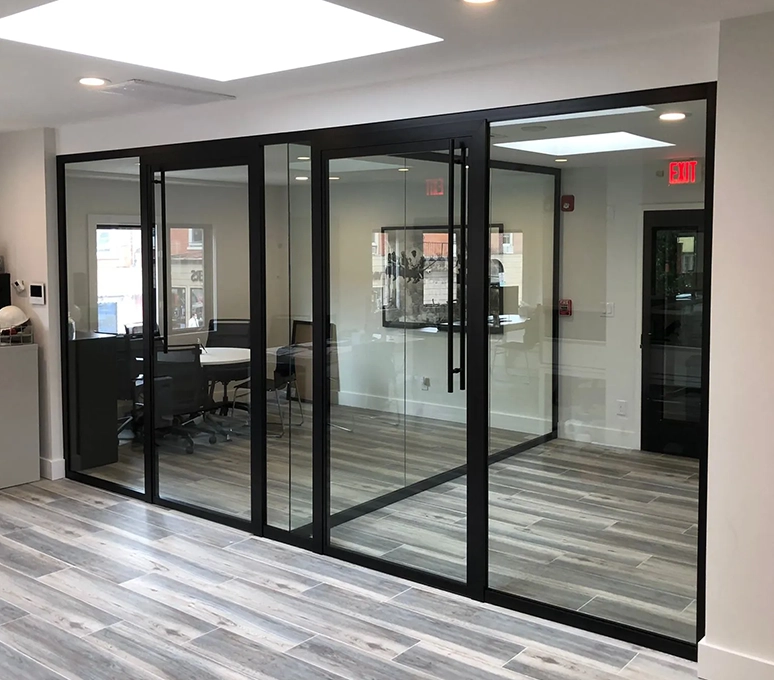
Specifically qualifying: DIRTT modular systems, Teknion partition systems, most demountable glass-front wall systems, and freestanding acoustic partitions. These all install on top of existing floors and connect to ceilings without structural modification.
Specifically not qualifying: traditional stud-and-drywall construction, built-in millwork permanently anchored to walls or floors (though freestanding millwork may qualify), and any partition that requires a building permit as permanent construction. If your local building authority classifies it as construction rather than furniture installation, the IRS likely will too.
Keep manufacturer documentation that classifies the product as demountable furniture. Your tax advisor will need this to support the Section 179 claim.
The ROI Case for Decision Makers
The Section 179 advantage changes the modular-vs-drywall calculation substantially. Without the tax benefit, modular walls cost 20-40% more than drywall upfront. With Section 179, the first-year cash flow impact can make modular walls cheaper than drywall in year one.
Consider a 15,000 square foot office renovation with 30 private offices:
Drywall option: $150,000 installed. Year-one depreciation deduction: $3,846. Net year-one cost after tax benefit (32% bracket): $148,769.
Modular walls: $210,000 installed. Section 179 deduction: $210,000. Net year-one cost after tax benefit (32% bracket): $142,800.
The modular option costs $60,000 more to install but $5,969 less after taxes in year one. Every subsequent reconfiguration avoided - at $1,000+ per office in drywall demolition and rebuild costs - widens the gap further. By year three, the modular option is typically $30,000-$50,000 ahead on total cost of ownership.
The tax code rewards flexibility. If your space will change during your lease term, the IRS is effectively subsidizing the premium for modular walls.
Related Services
See our cost guide for detailed per-square-foot pricing.
Need help with your project?
Get a free consultation and fixed-price estimate from our certified installation team.
About the Author

Innovative Projects
MBE/SBE certified commercial office installation. Serving NJ, NY & CT since 2019.