
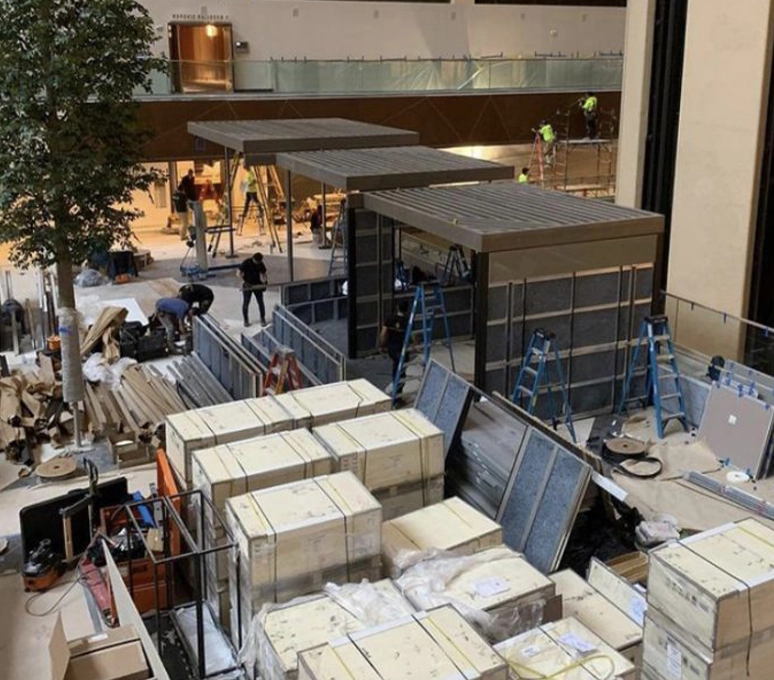
The TIA Gap Nobody Tells You About
A Tenant Improvement Allowance is a dollar-per-square-foot credit from your landlord toward improving your leased space. In the NJ/NY/CT tri-state area, TIAs typically range from $10-$100 per square foot depending on building class, lease length, and market conditions. Class A buildings in Manhattan may offer $80-$100 per square foot on a 10-year lease. Class B suburban offices in central New Jersey might offer $15-$30.
The gap that catches most tenants: TIAs almost always cover construction costs but almost never cover furniture, technology, or moving costs. Landlords are investing in improvements that become part of their building - drywall, flooring, electrical, plumbing, HVAC modifications. They are not investing in your furniture, your monitors, your phone systems, or your moving trucks.
A realistic breakdown for a mid-range office fit-out at $200 per square foot: construction costs consume $120-$150 per square foot (covered by TIA if sufficient), furniture costs $35-$50 per square foot (not covered), technology costs $25-$35 per square foot (not covered), and moving logistics cost $5-$15 per square foot (not covered). If your TIA covers $60 per square foot, you are personally responsible for $140 per square foot - 70% of the total cost.
How TIAs Are Structured
TIAs come in several structures, and the structure affects your cash flow and control:
Turn-key: The landlord manages construction using their own contractors. You approve designs but do not control the budget or timeline directly. The landlord delivers a finished space. This is the simplest option but gives you the least control over quality and schedule.
Allowance with landlord oversight: You select contractors and manage the project, but the landlord reviews and approves all work. The landlord reimburses costs up to the TIA limit, typically requiring paid invoices before releasing funds. You front the costs and get reimbursed - which creates a cash flow gap.
Direct allowance: The landlord provides the TIA as a rent credit or lump payment, and you manage the entire project independently. This gives you maximum control but also maximum risk. If the project goes over budget, the overage is entirely your responsibility.
The reimbursement timing matters. Most TIA structures require you to pay contractors, submit invoices to the landlord, and wait 30-60 days for reimbursement. On a $500,000 project, you may need to front $200,000-$300,000 in working capital while waiting for landlord payments.
Maximizing Your TIA
Three strategies to get more value from your Tenant Improvement Allowance:
First, negotiate the TIA before signing the lease - not after. TIAs are one of the most flexible negotiation points in commercial leases. Landlords competing for tenants in high-vacancy markets will often increase TIAs by 20-50% when asked, particularly for longer lease commitments. A 7-year lease instead of 5 might unlock an additional $15-$20 per square foot in TIA.
Second, understand what the landlord considers an improvement versus a fixture. Some landlords include modular wall systems in the TIA scope because they improve the space. Others exclude them because they are classified as furniture. Clarify this in writing before signing. If modular walls are excluded from TIA coverage, you lose the construction cost benefit but gain the Section 179 tax benefit - often a better deal mathematically.
Third, get competitive bids from your own contractors even if the landlord offers a turn-key build-out. Landlords using their own contractors typically mark up construction costs 15-25% because they are managing the project. Knowing the true market cost gives you leverage to negotiate a higher TIA or switch to an allowance structure where you manage the project directly.
Budgeting Beyond the TIA
The items your TIA will not cover still need a budget. For a 10,000 square foot office in the tri-state area, expect these out-of-pocket costs beyond construction:
Furniture: $350,000-$500,000 (workstations, chairs, conference tables, reception seating, filing, accessories). This is typically your largest non-construction cost. Workstations average $3,500-$8,650 each fully installed.
Technology: $250,000-$350,000 (monitors, docking stations, conference room AV, phone system, network infrastructure, access control). Budget $8-$35 per square foot depending on technology density.
Moving and logistics: $50,000-$150,000 (deinstallation at old location, transport, storage during transition, reinstallation at new location, IT migration, address change logistics).
Project management and design: $50,000-$100,000 if using third-party project management. Some landlords include design fees in the TIA scope.
Contingency: 10-15% of total project cost. Electrical scope changes, unforeseen building conditions, and material delays are the three most common overruns.
Total out-of-pocket beyond TIA for a 10,000 square foot office: $700,000-$1,100,000. This is the number most tenants do not budget for until it is too late.
The Modular Wall Strategy for TIA Optimization
Here is a strategy that sophisticated tenants use to maximize their total benefit: use traditional construction for work covered by the TIA, and use modular walls for work you pay out of pocket.
The logic: your TIA covers drywall construction at no cost to you (the landlord pays). But for additional offices or conference rooms beyond what the TIA covers, modular walls let you claim Section 179 on the out-of-pocket portion. You get free construction from the landlord plus a tax deduction on your own investment.
At lease end, the drywall stays (it belongs to the building). The modular walls come with you to your next space - or the landlord buys them from you as part of the space's furnishing. Either way, your modular wall investment retains residual value. Drywall has zero residual value to you as a tenant.
This hybrid approach requires coordination between your construction contractor (for TIA-covered drywall work) and your modular wall installer (for out-of-pocket partition work). Scheduling both scopes through a single vendor who handles walls, furniture, and millwork eliminates the coordination gap.
Related Services
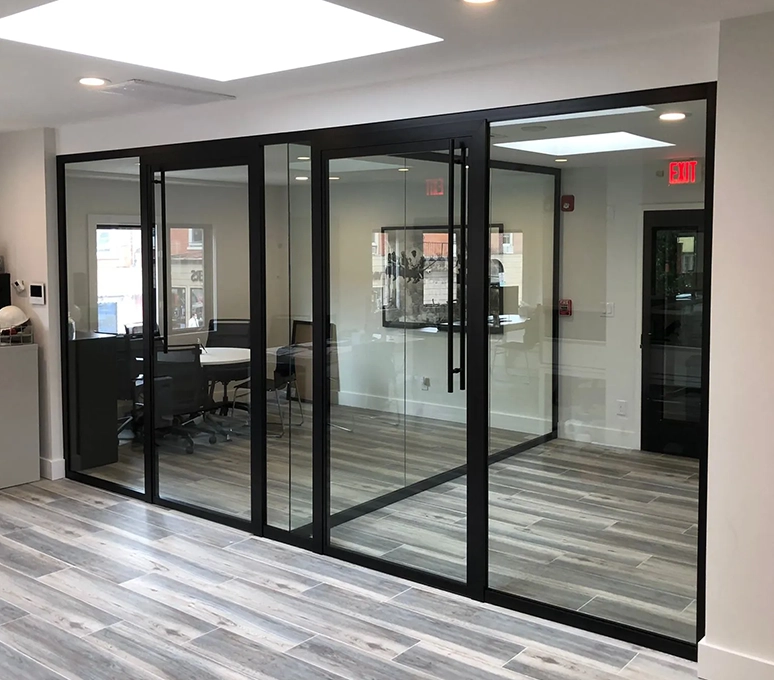
Modular Wall Systems
Glass partitions, demountable walls, and acoustic solutions. DIRTT & Teknion certified.
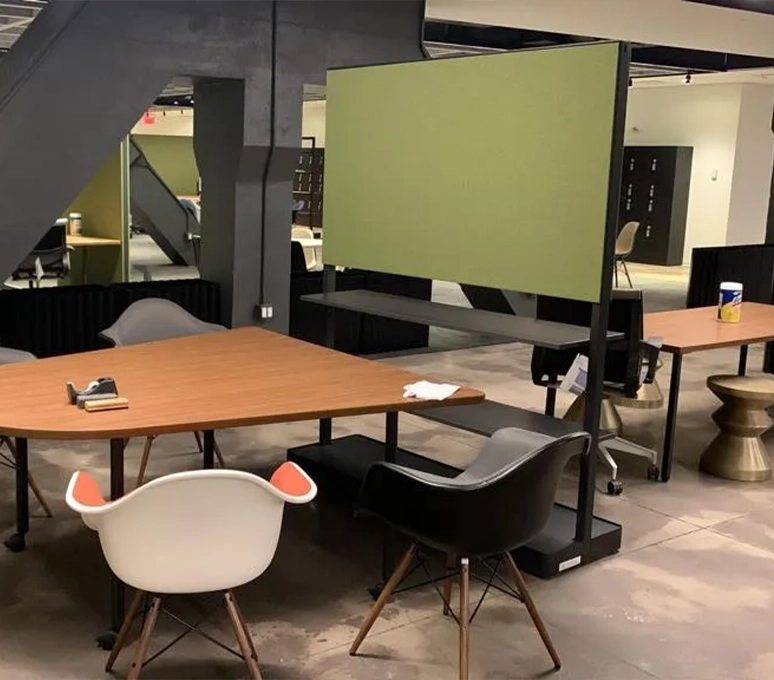
Office Furniture Installation
Workstations, conference rooms, reception areas, and ergonomic seating. Multi-brand certified.
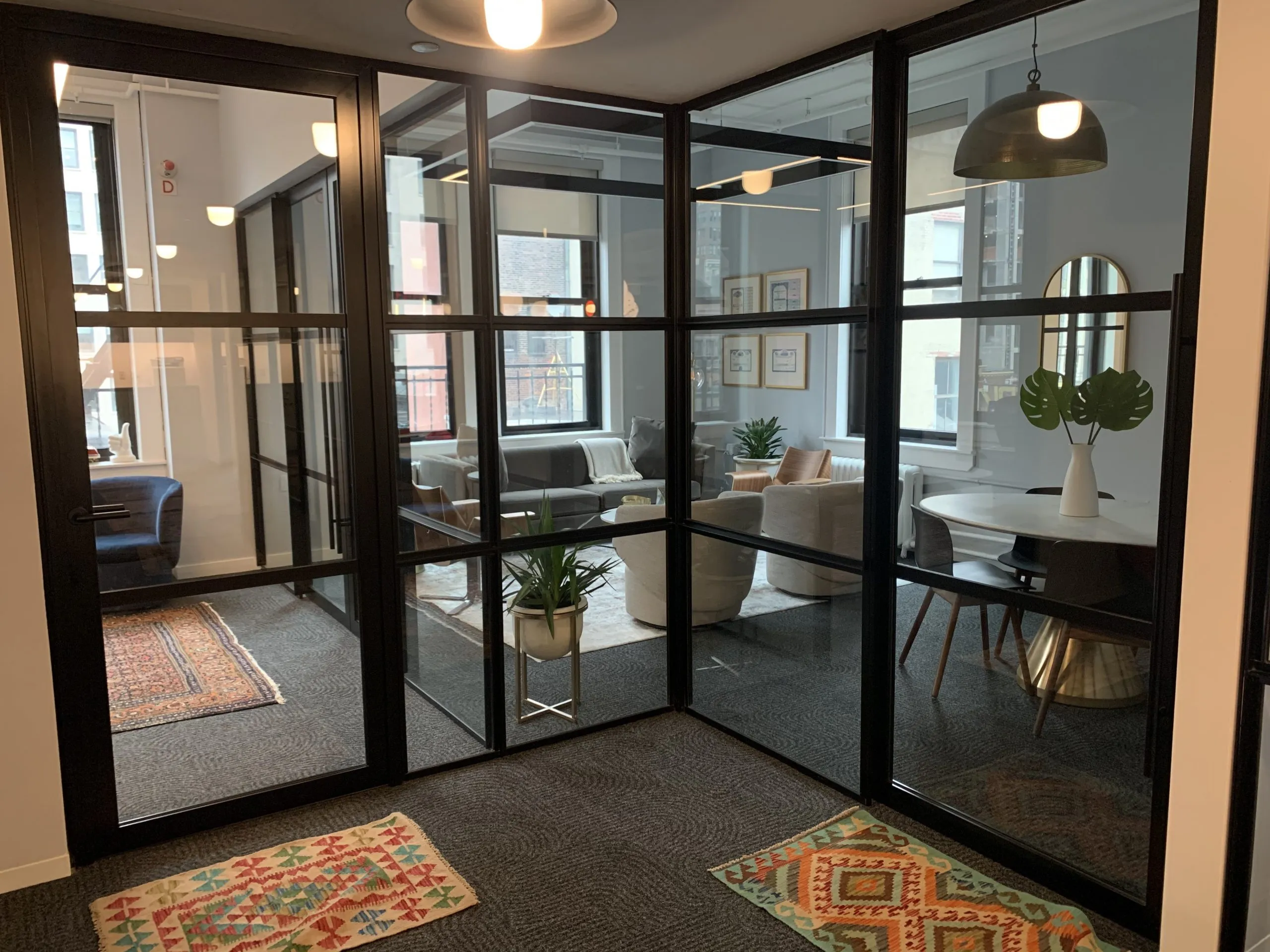
Commercial Office Installation
Full-service office fit-outs, build-outs, and renovations for corporate spaces.
See our cost guide for detailed per-square-foot pricing.
Need help with your project?
Get a free consultation and fixed-price estimate from our certified installation team.
About the Author

Innovative Projects
MBE/SBE certified commercial office installation. Serving NJ, NY & CT since 2019.